Home Resources Livejournal Feed Wordpress

Showing posts with label monsieur heger. Show all posts

Monday, March 12, 2007

Brussels Bronte Group Website

We have a new addition to the links list at left: the Brussels Bronte Group website, associated with the Brussels Bronte Blog. This website is a wonderful resource for anyone interested in the Brontes, and particularly with the city Charlotte and Emily studied in. Their time in Brussels was crucial, especially for Charlotte who went on to include her experiences there in most of her novels. The site boasts what is probably the most extensive collection of information on Monsieur Constantin Heger (who was her inspiration for Mr Rochester), and the pensionat available online, including some fascinating images, such as these of the pensionnat gardens Charlotte immortalises in Villette. Below is an image of the gardens Charlotte refers to in Villette as the allee defendue.

Tuesday, February 20, 2007

Bronte Digest

In an effort to catch up on recent news, I have compiled one of my Bronte Digests. This should also save stress on those who receive Brontëana post through a feed (and especially Livejournal).

The Acting Company's production of Jane Eyre at Ball State University.
When: 8 p.m.
Where: Emens Auditorium
Cost: $5 for Ball State students

And in North Carolina:

JANE EYRE: An adaptation by Polly Teale of Charlotte Bronte's novel; 8 p.m., Farthing Auditorium, Appalachian State University, Boone. Presented by The Acting Company. Admission $16, $14 for seniors, $8 for students. Call 800-841-2787 or 828-262-4046.

See this post for other scheduled performances.

A glowing review of the North American DVD release of Jane Eyre 2006, praising its non-canonical approach:

[Jane]'s damaged, and this makes her undemonstrative to a fault – a bit of a pain, actually. She has to go on a journey to find her true character.
...
This Rochester is wrestling with a highly-developed dark side, losing, and rather enjoying it.

This article on muses is remarkable for mentioning dear Monsieur Heger:

A muse is used regularly by many well-known male artists. However, there are few instances where female artists have turned men into muses. The few examples include Charlotte Brontë's unrequited yearning for the married Monsieur Constantin Heger, her tutor, who became the model for Mr Rochester in Jane Eyre and for Paul Emmanuel in Villette, and Emily Dickinson's passion for her unidentified "Master" to whom she addressed some of her most fevered poems.

The times, they are a changin'? Apparently people are less interested in love nowadays:

Heather Schell, an assistant professor of writing, picked up similar attitudes when she taught a course called "Love, American Style" at George Washington University. Her female students loved to discuss the chick-lit book "Bridget Jones's Diary" and the sexual follies of Jones and her boss, Daniel Cleaver. But they were not enthralled with Edward Rochester's lengthy courtship in "Jane Eyre." Quick flings, or hookups, were okay, "but love was rarely mentioned in class discussions," Schell says.

Their favorite assigned reading? A poetry anthology called "The Hell With Love."

Science (and literature?) show that money can't buy love:

And there are precedents. Jane Eyre could only have Mr Rochester after he had lost his money and been blinded. Cathy's passion for Heathcliff deepened as he went mad and destroyed everything about him. Scarlett only loved Rhett when he was down on his luck. Could it be that there is something seriously damaged in the feminine psyche?

Thursday, November 02, 2006

Reader, I Married Him: Mr Rochester, and M. Heger

I had to split the segment into two halves to make it fit, so here are parts one and two. I must say that I am still surprised by the nonsense some of the 'experts' have to say about Mr Rochester- especially Lucasta Miller. At least now I know where the 'Mr Rochester is a rake who's had lots and lots of mistresses' myth comes from. Incidentally I also find her description of Charlotte's attitudes to Jane Austen to be exaggerated as well. It makes her seem as though she thought 'great romantic tempests' were the only kind of real emotion one could experience. If you read her letters on Jane Austen, she is critiquing the depth of the characters in Emma. She says she cannot sense their arteries and blood beneath the surface. In other words, Jane Austen does not fully penetrate the psychology of her characters. That is a authorial strategy (not a fault). Charlotte was also writing these letters to defend herself from a rabid Jane Austen fan who had been writing to her about how she ought to write like Jane Austen. When the fan wrote back demanding that she acknowledge the superiority and genius of Miss A that's when Charlotte let him have it. She was, as I have said... a snark.

Since the clip makes reference to Monsieur Heger in discussing Mr Rochester, I have included a clip from the Brontes of Haworth, a mini series about the lives of the Brontes. In this clip Charlotte has returned to Brussels alone after the death of Aunt Branwell, and has a talk with Monsieur Heger.


Thursday, July 06, 2006

Bronteana is a Year Old!

The internet's first Bronte blog began on this site one year ago today. I want to thank everyone who has contributed to this blog so much over the past year, and to my readers especially. Thanks to Thisbeciel, Kristin, Monica, Biedroneczka, Thais, Alisa, Aidan Brack, Lousie in Manchester, Vaire, Lillieoz for the many tips and files you have sent in as well as helping with uploading links- my computer is notoriously slow. Thanks also Paul Gordon, composer of Jane Eyre: The Musical for allowing me to pester him from time to time.

Now, the story of Bronteana! A little more than a year ago a friend of mine started a Classics blog on blogger (Classics as in Homer, Classical Greece and Rome etc.). You will notice it is the only non-Bronte-related link on this entire site: Glaukôpidos: An Anachronism in Modernity. I keep a personal blog, and often felt that the Bronte content had long ago taken over so I decided to follow her lead. At first I had no idea what I was doing. I thought I would try some literary criticism but I couldn't come up with something every day! There are also early illustrated posts- such as Edward Bulwer Lytton in Petticoats. Eventually I discovered the wonders of google and other search engines. So there's news and a bit of everything besides debating and sharing my huge collection of... well, Bronteana. Which brings me to the name. Glaukopidos wanted me to name this blog 'BronteBlog', but I didn't like the name (no offense to BronteBlog ;).

This year has been incredible, very interesting and a lot of fun. Within the first few months I had emails from some very interesting people, including someone who believed they are a direct descendent of Constantin Heger, and someone who really is a cousin of the Brontes. Writers have written in, publishers have sent me their manuscripts (I got to see a preview of Branwell- which I reviewed unfavourably, much to the publisher's annoyance...). I enjoy hearing from my readers, because it lets me know that you are having as much fun as I am. I am gratified also, that my efforts caught the attention of the Bronte Society Gazette early this year. It has been a most wonderful year!

And now, the apology. I meant to have a lot of fun stuff prepared for this occasion but nothing has come through. The archives are still a horrendous mess, I have not been able to finish moving the resource site to Dalhousie, and the media files I meant to post are not uploaded... even this post is almost an hour late.

For the future. Well, the first post was a demand to the BBC that it release its 1973 production of Jane Eyre. That came to pass in the fullness of time (ie, this past spring/early summer) so, I think I'll start demanding their 1970 production of Villette!

Friday, April 28, 2006

Digest of Brontë News


The forcast for today is wierdness with 10% chance of irrelevancy.

The Guardian has a review of Shanghai Nights by Juan Marsé:

Susana is a capricious girl who spends her time painting her fingernails and indulging in wild cinematic fantasies in which Scheherazade and Quasimodo appear in Wuthering Heights.

Hmn.

Here's a book most of us should be able to sympathise with: A Dead Language by Peter Rushforth.

Its heroine, Alice Pinkerton, is the spinster daughter of wealthy suburban New Yorkers. She reads, as Dickens once said, for life; and her obsession with books (with the Brontës and Shakespeare and Edgar Allan Poe and Tennyson, and so on) comes across, publicly, as a kind of madness, for which her small-minded neighbours hold her up as a curious exhibit.

More news on Emily Brontë the race horse.

Retiring judge Terry Hallenbeck is working through his alphabetised reading list, but somehow missed A... for Anne Brontë.

Lastly, we are told to keep teens occupied this summer by getting them writing:

So, get creative and dream up different ways of engaging that bright spark-propose e-mail, pen-pals, composing a thoughtful letter to Aunt Dorothy for the gift of Jane Eyre last Christmas; maybe even a letter to the editor of the local newspaper about some burning issue dear to your teenager's heart, such as why teens should be allowed to return home at all hours of the night and early morning.

Oh, yes, this will work. M. Heger put Emily to the same task, and the result is not very stimulating (she had to write several fictional letters). I can't imagine she found it enjoyable either. Some of the other advice is sound, though!

Monday, March 13, 2006

Le Chat by Emily Bronte


Last night I decided to read some of the Belgian devoirs before I went to sleep. I had read a few of Charlotte's devoirs but none of Emily's. This one, Le Chat (The Cat) is the first. It was composed in 1842. The work is interesting, and I think there is enough of the author's opinion running through it that you wouldn't say she was simply adopting an argument set down by Monsieur Heger. I found it charming, in a sense. The topic might seem trifling at first glance, but she uses the occasion- defending cats- to comment on human hypocrisy, cruelty, and ingratitude. I think she finds her place somewhere towards the end where the narrator argues with the lady who prefers lap dogs to cats. The ending was nicely placed as well: "For, assuredly, the cat was not wicked in Paradise."

The criticism in this edition, however, is somewhat heavy handed. I have looked over a few of Emily's other devoirs. In each, the editor tells us how Emily's French shows her 'resistence' to the very end, in the from of syntax etc, to the domination of M. Heger, or this new language. I think this is absurd. It is very natural for someone learning a language to express themselves for a time in their customary forms. I recieved 13 years of French language training and yet I still prefer using French words which reflect 'English' ideas- I am not 'resisting' French. In fact, despite my preference for maintaining my... 'barbarisms' as M. Heger might say, when I compose in French, I 'think' in French as well. Also, at the moment I am a teaching assistant for a Latin class. In Latin, word order is fluid- quite the opposite from English. Very often students merely use Latin words in English word order on their assignments.

Since it is short, and one did not exist, I have transcribed Le Chat. There is an English translation in this book but I think the French is more vital, and more authentic- obviously since the French is the work of Emily herself and not a translator.

Sunday, December 18, 2005


The Lamps of Monsieur Heger

This summer a friend helped me buy a copy of The Belgian Essays, edited and translated by Sue Lonoff. I intended to write a paper about the 'Athens Saved by Poetry' devoir written by Charlotte, to be submitted for a Classics conference but I never got around to it. The book is very well arranged with the English translation followed by the original French on the facing page. The notes and corrections of Charlotte, Emily, or M.Heger are also shown. There is also a brief discussion of each devoir (essay) and some information about Heger's method of teaching.

In the course of the book the most favourite sayings of M.Heger are recalled by a former student of his from some time after Charlotte and Emily had returned home from their stay at his school. These sayings were called his 'lanterns'. Before writing, his student claims that he would begin by having them 'put off the shoes' by having a student speak the following:

Spirit of Wisdom, guide us: Spirit of Truthfulness, teach us: Spirit of Charity, invigorate us: Spirit of Prudence, preserve us: Spirit of Strength, defend us: Spirit of Justice, enlighten us: Comforting Spirit, soothe us.

The remainder of the 'lanterns' are more straightforward advice about writing. This first one is preparation for entering into a solemn act- writing. Some of them seem to require a little more explaination:
One must give one's soul as many forms as possible.

One must never employ, nor tolerate the employment of, a literary image as an argument. The purpose of a literary image if to illuminate as a vision, and to interpret as a parable. An image that does not serve both these purposes is a fault in style.

One must not fight with a difficult sentence; but take it for a walk with one; or sleep with the thought of it in one's mind; and let the difficulty arrange itself whilst one looks on.

One should not read, before sitting down to write, a great stylist with a marked manner of his own; unless this manner happens to resemble one's own.

Wednesday, November 23, 2005

Marginalia...

It is always a good idea to write things down once you have thought of something. It has taken me many years to get over my horror of writing in books. It still horrifies me, but now I have certain copies devoted to scribbling my observations in. It is hard to lose track of them this way. Previously I wrote my commentaries on separate sheets. I have lost most of these, and other times the notes loose their meaning. I often draw pictures of what I want to express in my essay as well. These are also very... interesting afterwards.

I came across an interesting note, which would have been completely forgotten if not for a quirkly turn of events last semester- and indeed, this one. The publisher I study with invited us to write poetry for a book we are publishing. The bulk of the manuscript is from another class, and it is not necessary for us to write something ourselves. I had decided not to give it a try, but today he passed around a book of photographs which inspired me so strongly that I went home and wrote two and a half drafts. I wrote them in a certain notebook I have. The first time I used it was last semester. After I took a class on the Brontes, the following semester I studied Restoration literature including a work by John Wilmot, Earl of Rochester. The coursework demanded a 10 research paper. At that point in the year I did not feel that I had another research paper in me. Something prompted me to suggest an alternative. I ended up writing the research paper in verse.

I had forgotten that I also jotted notes down in the process of writing the poem. When I finished writing today, I flipped back and found them tucked in the back of the poem (perhaps it was for revision? I don't remember why I wrote it). Anyway, the interesting point is the last:

'Rochester's seduction of Anne Temple'

This is puzzling for more than one reason! Not only did I not write about Miss Temple, it further deepens the mystery of just what is going on between Wilmot and Mr Rochester. Sadly, I have no more notes- or at least I cannot find them! I recall reading about her, but I cannot remember any of the details of their relationship.

Another Brontean note about this notebook of mine? I've written a few inspirational notes on the inside covers. On the back I've inscribed the 'lamps' of Monsieur Heger, although I have never given them a try. I ought to someday!

Monday, October 10, 2005

Monsieur Heger sighting?

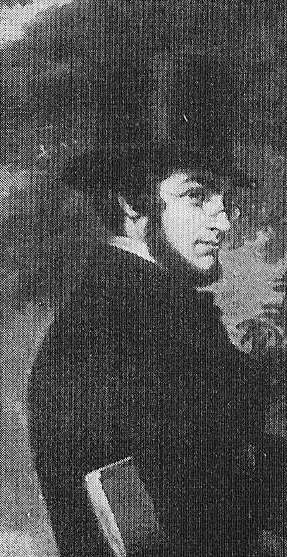
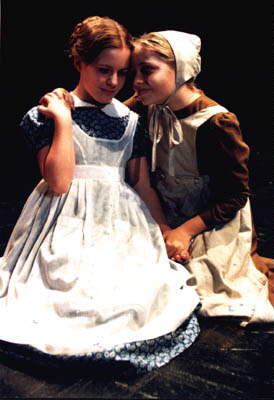
As I updated my blog, looking at the image from the UMaryland production of the Jane Eyre musical, a had a vague sense that I had seen this all somewhere before. It didn't really have time to bother me before I realised what was so familiar about the actor playing Mr Rochester- he looks like Constantin Heger. No really. See?


That's M. Constantin Heger on the left, and James Gardiner on the right (from the photo by Stan Barouh). The image on the left is a detail from a large photocopy a friend sent me of a portrait of the Heger family. M.Heger was Charlotte Brontë's teacher while she was studying abroad in Belgium at the Pensionnat Heger. It's my understanding that she based much of Mr Rochester's character on monsieur. They certainly both have a penchant for cigars and bonbons at any rate ;) And it goes without saying that he is the model for the fabulous Paul Carlos Emmanuel, of Villette. I've always wanted to know more about him, but the books I have on hand have been printed in the 1890s and it looks like there had been some censorship going on. Over and over again it is asserted that Charlotte was never in love with the married Heger, but obviously many believed this was so. What the current evidence for either case is, I don't know not having any more recent works for comparison!

The 1970s Yorkshire TV mini-series The Brontes of Haworth certainly asserts that she was in love with Heger. So my guess is that the letters she wrote to him have been widely published, and I just haven't come in contact with them yet.