Home Resources Livejournal Feed Wordpress

Showing posts with label bronte society. Show all posts

Tuesday, February 20, 2007

Bronte Spirit


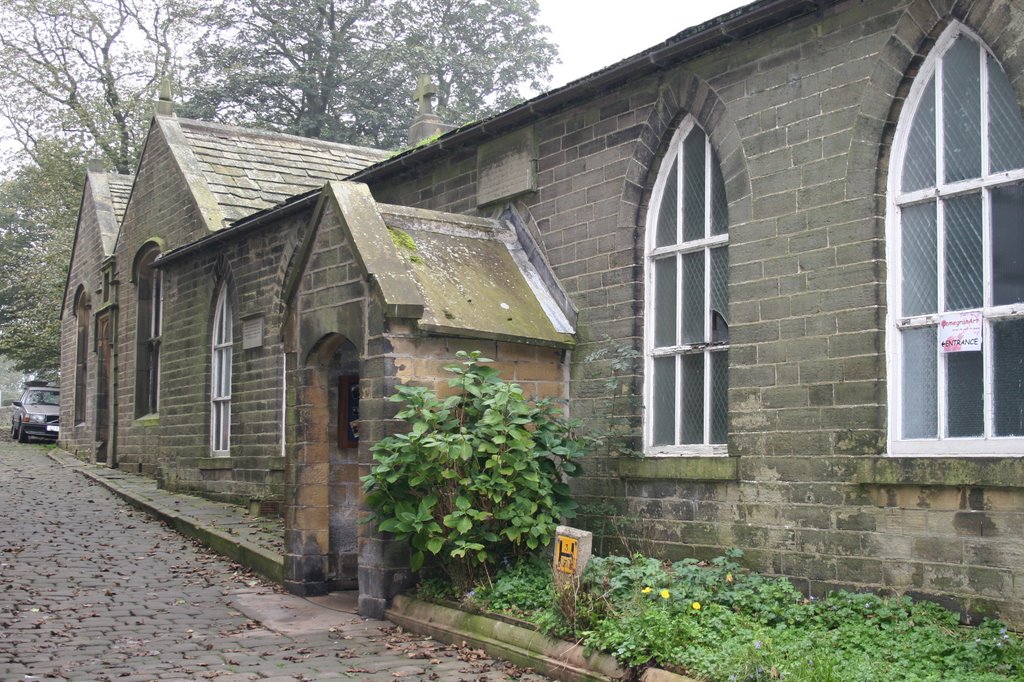
Brontë Spirit is the name of a partnership between Haworth Parish Church and The Brontë Society. Its aim is to lease, redevelop, maintain and administer the School Room building, which is owned by Haworth Parish Church.

We are concerned with the preservation and restoration of this Grade II listed building in which Charlotte Brontë taught.

We are hoping to open up the building, which is situated on the other side of Church Street from the Parsonage Mueum. We hope and intend to heighten awareness of the Brontë heritage through the successful education programme of the Parsonage Museum, to develop education in all areas of the Arts, provide space for artists and crafts people and a place for local community groups to meet.

So far we are in the planning and fundraising stages.

We are going to add information to this website periodically to keep you informed, so look at it regularly to find out about the progress we are making.


To find out more about the projects, you can visit their blog at: http://www.brontespirit.blogspot.com/

The Brontë Influence

From Yorkshire Today:

THE Brontës' lives and their books have been inspiring writers, They will look at the remarkable power of the Brontës' writing and its influence on their own work.
The event, organised as part of the Brontë Parsonage Museum's contemporary arts programme, will bring together a number of writers who have acknowledged a debt to the Brontës, including Booker Prize nominated novelist Michele Roberts.
Rather like the Brontës', Roberts's writing has often been referred to as "feminist", although she has stated that it is primarily about "food, sex and God". She has won many literary prizes and was elected a Fellow of the Royal Society of Literature in 1999. Other panelists will include Patricia Duncker and Stevie Davies.Andrew McCarthy, deputy director, Brontë Parsonage Museum, said: "The Brontës' influence on other writers has been profound and it's wonderful to have contemporary writers of such prominence here in Haworth to talk about the Brontës in relation to their work. The writers who will be joining us are hugely talented."

Thursday, December 07, 2006

Newly Published Letter from Patrick Bronte

The loving side of 'stern' Bronte father
By Clive White

A previously unpublished letter has thrown new light on the character of the clergyman father of the famous Bronte authors.

It now appears the Reverend Patrick Bronte was not the "cassocked savage" as branded by Elizabeth Gaskell, his daughter Charlotte's biographer.

It shows him to be, in fact, a loving and courageous dad.

The letter is among the archives at Lambeth Palace, London, and was written to Charles Thomas Longley, former Archbishop of Canterbury, who was a friend of Patrick.

In the letter Patrick says: "I have lived long enough to bury a beloved wife and six children - all that I had, I greatly enjoyed their conversation and company.."

"Now they are all gone - their image and memory remain and meet me at every turn - but they themselves have left me."

The significance of the four pages has been revealed by Bronte scholar and author Brian Wilks, of the Bronte Society.

It was written ten days after the death of Charlotte, the author of Jane Eyre and the sixth of Patrick's children to die before him.

The 78-year-old was left to grieve at Haworth Parsonage, and the letter gives a deeply moving account of the tragedies that struck his gifted family, said Mr Wilks.

The vicar lost his son Branwell, aged 31, in September 1848, Emily, who wrote Wuthering Heights, three months later, aged 30, his daughter Anne, aged 29, in May 1849, having already suffered the grief of losing his wife and two elder daughters some years earlier.

Mr Wilks, who intends to publish the letter in the Bronte Society Journal next autumn, said: "I have always supported the idea that Patrick was a compassionate man.

"It was fashionable to think of him as a bad tempered man and there may have been some of that, but overall he was very compassionate.

"The best thing about the letter is what he says about missing the company and companionship of his family.

"The letter is a missing piece of the jigsaw and will startle and delight Bronte enthusiasts."

It was sent to Longley in 1855 while he was Bishop of Ripon, thanking him for his words of comfort, but also reveals how Patrick's faith had been challenged by the devastation.

He says: "The Lord gave and the Lord took early awaybut I have often found and find in this last sad trial that it is often frequently extremely difficult to walk entirely by faith and sincerely to pray They will be done on earth as it is in heaven.'"

The sentiments in the letter contradict comments made by Mrs Gaskell in a magazine article. She said Patrick was a "cassocked savage who ought to be have been taken out into the garden and shot."

Ann Dinsdale, the Bronte Parsonage librarian, said the letter revealed Patrick as a loving father.

"Elizabeth Gaskell had an axe to grind. The Bronte novels at the time were perceived as brutal and shocking and she was trying to protect Charlotte.

"The way she did it was to make the case that what else could they write about when they were living in this backward place with a half-mad father and alcoholic brother?"

In reality Patrick was a compassionate father who suffered and missed his children, she added.


With a new biopic of the Brontes in the works, I can only hope that we will no longer see Patrick Bronte depicted as an abusive father. It is surprisingly difficult to escape from Gaskell's malicious portrait. So many editions of the Bronte novels state in their tiny penny paperback bios how their father was brutal, or severe. This letter does not surprise me in the least. Some of the well-known letters from Patrick are very warm, and sometimes even silly (as when he wrote a letter to Charlotte under the guise of one of the family dogs. Charlotte was so amused that she forwarded it to her friend). Needless to say, I have little love for Gaskell. Who, incidentally, didn't just say that Patrick ought to have been 'taken into the garden and shot' in a magazine article- she villified him in the biography she wrote for Charlotte at Patrick's request. It is well known today that she relied on the testamony of servants who had been dismissed and had their own 'axes to grind' as well as her own prejudices (she seems at a loss to understand how an Irishman could be so calm- he must have irrational 'volcanic' outbursts of rage while in private- such as shredding his wife's dress or throwing his children's boots into the fire). My point is, then that this letter is not so 'startling' as the article suggests...

Monday, November 06, 2006

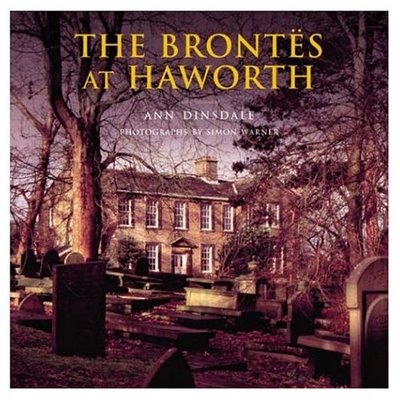
The Brontes at Haworth


Our fearless leader, Bronte Society Chairman Richard Wilcocks at the Bronte Parsonage Blog interviews Parsonage Librarian Ann Dinsdale about her newly published book, The Brontes at Haworth.

For research I didn’t have to stir beyond the library here, which of course contains the best collection of Brontë material in the world. I had access to parish records, contemporary accounts, newspapers, everything. After seventeen years I am quite familiar with what there is.

[...]

Some new or little-known items might stick in the reader’s mind, for example some of the contemporary views of the Brontë novels. One reviewer said that Wuthering Heights would ‘live a short and brilliant life and then die and be quickly forgotten’.

Then there’s the transcript of the account book of the local joiner William Wood, a good name for a joiner I think. He made coffins. His spelling gives an idea of how he spoke.

When ‘Miss Branwell’ died in 1842, her ‘coffen’ cost £5.12s.6d. When Branwell died in 1848 the ‘coffen & scroud making’ totalled only £3.15s. Then there is this:

Emlea Jane Bronty. Died Dec 19th 1848 in the 30 year of hir Age. Coffen 5ft 7” long 16” broad.


If you would like to purchase the book, it is available for order from the Bronte Parsonage online store.

Wednesday, October 25, 2006

'Cut the Religion and Psychology- Get to the Bonking'

The presentation went very well (I think), and now I am free to write another on a 18th century Derbyshire manuscript my professor stole has, and I'm going to publish for the first time. yay! But in the meantime I took a look around the blogs for Janian news and met quite a lot of bile- bile which I confess that I sympathise with in part.

The disappointment of Bronte fans has been let loose on the recent BBC adaptation of Jane Eyre. I have not entered the debate fully because to be honest I need to think over a few things. Anyway, here are some thoughts:

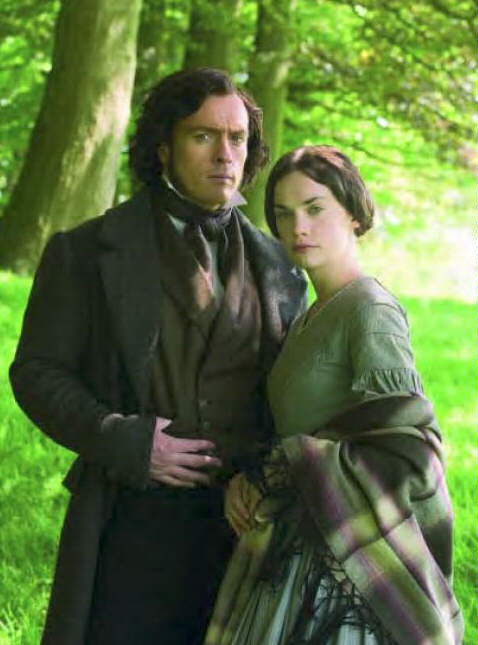
From the Enthusiast's Guide to Jane Eyre: Beautiful cinematography and music are featured in this BBC miniseries and Ruth Wilson makes a really fantastic Jane- presenting her many emotions in a believable and subtle way. Toby Stephens is not quite the Rochester of the novel, he's more of a charming "rake" and his absolute love for Jane is not as apparent as his absolute love for tail. A thoroughly modern interpretation, sensationalzing the novel and turning it into more of a Gothic/Harlequin romance.

I have to agree that from the first episode it seemed more Harlequin romance than Jane Eyre to me.

From 'Reader, I Adapted Him': "Adapting a 19th century book and expecting the characters to adopt 21st century attitudes is precisely like going on holiday to Spain and insisting on drinking fish and chips and Courage best. There may have been a time when the BBC adapted Great Books in the hope that the Unwashed Masses who hadn't read them would be encouraged to discover the wonderful world of reading; or else they did radical reworkings of the classic to challenge and titillate the people who had. Now, it's just a matter of scouring old books for period love stories. Historical tourism. "

By the way, those huge sentences are not Charlotte's fault- if she were writing this paragraph you might see something like this- she wrote with a lot of dashes because she- she was reflecting the ways that actual speech is often broken- her publishers then went in and replaced most of them with semicolons- so blame them! Also, I think Mr Rochester is the 'thoroughly good Christian' not St.John but that is the topic of a whole other post...

From 'Jane, you ignorant slut': "The second problem is that Jane Eyre walks a fine line between eroticism and morality. Jane herself is a hot little number in a morality-mad age that divides the world into passionless "respectable" women and whores, yet she refuses to fall into either category by denying or yielding wrongly to her desires. By insisting on the right to self-definition, Jane ennobles her own story. A governess marrying the master, for God's sake -- it's the early Victorian social equivalent of being a gold-digger or sleeping with your boss. But Jane Eyre wants to sleep with the boss on her own terms, in a way that allows her to keep her self-respect and her independence. She will not consent to be his lover, but neither will she be content to remain his governess. That's what makes the story so exhilarating, and that's why women love it -- any woman of spirit struggles with sexual self-definition in a society that wants to own her snatch. "

Sunday, September 24, 2006

The Full Bronte

That is the title of this article from The Sunday Herald, examining the eternal question of how the Brontes wrote their novels (why, with ink of course...).

TH AT Charlotte and Emily Bronte produced two of the greatest romantic novels ever written without – to anyone’s knowledge – ever having had sex is a fact that has astonished and titillated onlookers for a very long time. Back in 1853, the novelist William Thackeray patronisingly surmised that Charlotte was a “naive” woman so eaten up with frustration that she would have preferred sex to literary success, only she was too ugly to get a man. “Rather than have fame,” he wrote, “she wants some Tomkins or another to love her and be in love with. But you see she is a little bit of a creature without a penny worth of good looks, 30 years old I should think, buried in the country, and eating her own heart up there, and no Tomkins will come.”

[...]

All of the Bronte sisters shocked Victorian society with their very different novels, but did it matter that they were virgins when they wrote them? Interestingly, during the 19th and early 20th centuries not only misogynists like Thackeray but feminists too seem to have had an undue interest in the Brontes’ non-existent sex lives. Where Thackeray looked down on Charlotte as a sex-starved spinster , the feminist writer May Sinclair worshipped her as a “virgin priestess of art”, and was devastated to discover that her idol had fallen, all too humanly, in love with a married man.

This is all par for the course but still interesting. However, I was amused by the description of Jane Eyre being 'set in the Regency period'! It looks like we still can't agree on this.

Incidentally, this has nothing to do with the article but everything to do with the title: 'the Full Bronte' has a special meaning for anyone who has taken a look at the articles written about the Gordon/Caird musical of Jane Eyre. At the end of one fateful interview with their leading man, in a comically desperate moment to get those modern folk interested in the story (which we see is still the dominant motivation for today's adaptations), the actor added: "I don't want to sound wrong but there's a lot of beautiful women in this show. And we all get naked at the end. No one seems to know that. Yeah, the Full Bronte!"

Friday, September 22, 2006

Rochester: 'The sex is of no interest to me whatsoever'

Taking lines out of context is a lot of fun. I've had confirmation today that I picked the right school. I've 'begun' 'work' on my thesis on adaptations of Jane Eyre and am finding Jane Eyre and What Adaptors Have Done to Her to be a lot of fun. A little thin on criticism, but the quotations are excellent- and often totally hilarious. It begins with a fabulous quote from a theatre review in which they express astonishment that there is no 'National Society for the Suppression of Plays about the Brontes.' Talk about harsh! I love it. Anyway, she goes on to say that the BBC crushed her dreams and so she's not going to play with them but stick to Victorian stage adaptations and two American films (so there!).

The Victorian plays are awesome. I have one linked on the sidebar- the 1857 Brougham one, which includes happy dancing farmers at the end, tons of 'snubbed, by Jove!,' Grace Poole's cake addiction and one 'dem rhinoceros!' (The illustration from the script also shows Mr Rochester flying through the air). To this must now be added some extraordinary lengths to make the story happier (Jane has only just told Rochester that his infirmities 'are none to me, sir' when- poof! he can see again! This reminds me of a blog entry I read recently where someone complained that Rochester's hand doesn't grow back and he doesn't get 'pretty'. If his eye can grow back at a word from Jane, I can't see the trouble with the hand and a perm).

Photobucket - Video and Image Hosting

Two of my favourite moments come from the same play. Goes a little something like this:

Brocklehurst: Ew, who's that smelly tramp?
Rochester: Oh, the hurting off stage and the pain!
Brocklehurst: Let us do the Christian thing and flee the smelly tramp! *leaves*
Rochester: SNARKSNARKSNARK blast it. SNARK
Jane: Oh, snarking. Can I help?
Rochester: You ma fairy womans! Give me a hankee and lift me to safety.
Jane: ...O...kay. Uhm. There.
Brocklehurst: Did you just lift that smelly tramp with a handkerchief? You are so FIRED!Rochester: No, she's hired. I need a governess. Here's my phone number. See you are 9. *clicks*

John Reed: All your inheritance are belong to me! Ha ha!
Jane: Noooo!
Rochester: *whips off his bandages and snatches the inheritance papers*
John Reed: Blast! It cannot be! He sees!
Rochester: I will now pronounce a very long speech about blindness touching mostly upon the blindness in not realising the love of a certain little lady in the crowd today-
Jane: Oh, that's me! I love you!
Rochester: Yes, I was blind but not blind to see ma woman's inheritance stolen!
Jane: ...Hey, you can see!
Rochester: ...Yes. Sorry, I was just pretending.

One last thing. From yet another adaptation comes this complete 'whitewashing' of Rochester's character. It would also be quite a stupendous cover story... Once upon a time Edward loved 'Henrietta' but while he went to London, she married his elder brother 'Arthur.' Edward was going to protest but they had him declared mad, tied up, knocked out and put on a ship to the West Indies. Time passes, everyone dies, so he returns home to find a note from his brother. His brother explains that Henrietta quickly came to hate him, she took a lover, gave birth to Adele. He killed the lover, and had Adele taken from her, so she went mad and he died of guilt- or something. Anyway, Edward is now supposed to hush up Henrietta and raise Adele. Aw... (I couldn't help but think this is too much like: 'It isn't my fault, Jane! I was kidnapped by pirates!')

Okay, one last last thing. The Bronte section here is at least twice the size of the one at my old university and it has bound editions of Transactions of the Bronte Society going back to the 1890s (they all look so cute in their sideburns and cravats for those member portraits! The Victorian editions are in facimile). So guess what I will be doing this weekend! If only I had a scanner... some the material is entirely new to me (including an un-finished novel by Charlotte called 'Ashworth.')

Monday, September 11, 2006

Protecting the Imagination

Karen Utley writes 'the imagination deficit could cripple society' in today's Statesman.

As young girls, the Bronte sisters created and performed imaginative dramas; Agatha Christie conversed with her many imaginary friends; young C.S. Lewis invented worlds and recorded their imaginary histories.

Fascinated by the origin of genius, we remember the childhood inventiveness of these novelists because the fruits of their unique and powerful imaginations have entertained generations of readers and continue to inspire authors and filmmakers today.

[...]

Unfortunately, however, electronic entertainment industries now are targeting even the youngest children. Their products and programming, including a cable network especially for babies, not only usurp the time children once devoted to imagination-strengthening play, they saturate young minds with ready-made, pre-imagined adventures. Constant exposure to the already-visualized creations of TV producers and video-game designers undoubtedly disrupts the natural growth of creativity. Unless parents and teachers take defensive action to protect children's imaginations, the electronically stunted imaginations of future writers will produce no "Jane Eyre" or "Chronicles of Narnia."

The cry has gone up many times in recent years that the imagination is being stunted by modern technology. I tend to agree, although I can't say that the imagination cannot find other ways to develop. There seems to be less tolerance for anything less than perfection in adapations, for instance. There is little allowance made for budget concerns, or other limitations. And yet, perhaps the proliferation of fan fiction, and fandom in general is a sign of where all of those imaginative energies are going. For instance, someone might forgo reading Wuthering Heights, watch the movie instead and then start to wonder what might have happened inbetween scenes, or create alternate plotlines, or look backward into the backstory or forward and create a 'sequel'.

To address the publishing issue, personally I am dissappointed with the quality of writing that has passed through my hands as an editor. The heart is gone. I believe the reason for the dearth of great literature is a more complex issue which cannot be attributed to a single cause. I have not read anything truly imaginative nor powerfully excecuted in a long time. And then, the work only had moments of illumination with long periods of dullness of style. These writers did not have television and cgi to blame. Doubtless, eventually we will see something truly great come along once again.

Wednesday, July 26, 2006

Confirmation on Preview of Jane Eyre


Richard Wilcocks, recently elected chairman in council of the Bronte Society and editor of the Bronte Parsonage Blog has confirmation of our news from earlier this week that there will be a special preview of the first two episodes of the BBC's new production of Jane Eyre at the National Film Theatre in London:

Thanks to the British Film Institute for providing the information that there will be a special preview of the first two parts of the new BBC Jane Eyre on Saturday 16 September, beginning at 5.50pm.

This does not yet appear in their publicity (www.bfi.org.uk) so it might be wise to check the time nearer the date.

Ruth Wilson, Toby Stephens and other cast members are booked to be on stage after the showing. Try getting hold of your tickets early. The BFI box office number is 020 7928 3232

So, does any kind soul out there in the UK want to do some reporting for a poor Canadian blogger?

ETA: CORRECTION: At this point there has been no confirmation on which cast members are booked for the screening at the British Film Institute.

Friday, July 21, 2006

Free Day at the Bronte Parsonage Museum

This article is also by Bronte Society PR consultant Diane Benn:

FAMOUS BRONTË MUSEUM WELCOMES ITS 7TH MILLIONTH VISITOR

The Brontë Parsonage Museum in Haworth were delighted to welcome the 7th millionth visitor through its doors on Saturday 24 June 2006 and plan to celebrate with an open day which will be free to local people.
The lucky visitors were Mr. & Mrs. Derek Stringer from Bowness-on-Windermere who were visiting Haworth to take in the atmospheric home of the talented Brontë family whose novels such as Jane Eyre and Wuthering Heights won them international acclaim.
Alan Bentley, Brontë Parsonage Museum Director, surprised the couple with a bag containing a selection of Brontë gifts, including a collection of the Brontë novels. The couple also received a year’s free membership to the Brontë Society and were invited to be guests of honour at an open day at the Museum on Saturday 29 July 2006.
The Parsonage Museum has enjoyed buoyant visitor figures over the years with the highest visitor figures of 221,000 recorded in 1974. This figure was attributed at the time to the popularity of a TV mini series, The Brontes of Haworth, and the recent success of the Wuthering Heights film staring Timothy Dalton. Soon after it was decided that the large numbers of visitors were damaging the 200 year old building .
Alan Bentley said "to celebrate the 7th millionth visitor is a real honour for the Parsonage Museum. Although there have been many additions and alterations to the Museum since 1928, it remains a place of pilgrimage for thousands of UK and overseas visitors. Our aim at the Parsonage is to extend a warm welcome to all and to provide an authentic interpretation of what life was like for the Brontës in the 1800s". He added "I would like to extend a personal invitation to all members of the public to come and join us on the 29th July and to learn a little more about the world’s most famous literary family".
The planned open day on Saturday 29 July 2006 will be free to local residents within the BD20, BD21 and BD22 postcode areas with normal admission charges applicable to other visitors. Some form of identification will be required for local people to gain access. The fun-filled day will include drama, free guided walks, short talks on the Brontës and a chance to visit the house where the Brontës lived and worked.

New Chairman Has Strong Opinions

Photobucket - Video and Image Hosting

The following is an article by Diane Benn, PR consultant of the Bronte Society who kindly sent us the release:

Richard Wilcocks, the new Chairman of the Brontë Society, has strong opinions on the way that classic literature is taught in English schools.
Recently-elected by the Council of the Brontë Society, which runs the Brontë Parsonage Museum in Haworth, Yorkshire, Richard Wilcocks said, "Young people are given insufficient time in the classroom for in-depth study of texts. This is often in spite of the best efforts of teachers."
Mr Wilcocks should know what he is talking about, because for many years he worked in the world of education, as a teacher and as an examiner with the Assessment and Qualifications Alliance. He has also been a journalist, has lectured for the British Council at the University of Poznan in Poland and, amongst other qualifications, possesses a Master’s in Drama and Theatre Arts.
Strong interests apart from the Brontës include the theatre and music - he sings with the Leeds Festival Chorus. A family man, he lives in Leeds. He continued:
"Many more people are drawn towards the Brontës by forces outside schools, for example by new adaptations of novels like Jane Eyre by the BBC.
"A series of Government initiatives in schools - with the admirable objective of improving standards of literacy - has led to a situation in which love of reading and literature generally is being rather neglected in favour of a rigid ‘framework’ approach.
/…….
"For at least the last decade the definition of English as a subject has been increasingly prescribed. The emphasis on capital L Literacy is becoming a significant encroachment on English as a creative and humanistic domain, because it does not appear to give more than a token acknowledgement for the value of literature.
"I believe in the sharing of ‘real’ texts, whether described as classic or popular. This enables personal growth and the study of literature to come together. This sharing - through reading, creative writing and improvised drama - was the feature of the Brontë children’s early educational experiences which led to the great works which followed later.
"The forces which drove them in a nineteenth century parsonage are universal, and can be harnessed in many other environments including that of a twenty-first century classroom.
"Currently-prescribed practices in the official literacy strategy require pupils to focus on fragments of text, seldom on whole texts which might elicit a ‘whole’ response. This discourages the formation of a profound personal relationship with a work of literature.
"The best teaching is based on the stimulation of the imagination, of course, and teachers can get plenty of advice on that from the Parsonage, which is rapidly developing into a regional centre for the Arts."

Mr. Wilcocks is also the editor of the Bronte Parsonage Blog.

Thursday, July 06, 2006

Bronteana is a Year Old!

The internet's first Bronte blog began on this site one year ago today. I want to thank everyone who has contributed to this blog so much over the past year, and to my readers especially. Thanks to Thisbeciel, Kristin, Monica, Biedroneczka, Thais, Alisa, Aidan Brack, Lousie in Manchester, Vaire, Lillieoz for the many tips and files you have sent in as well as helping with uploading links- my computer is notoriously slow. Thanks also Paul Gordon, composer of Jane Eyre: The Musical for allowing me to pester him from time to time.

Now, the story of Bronteana! A little more than a year ago a friend of mine started a Classics blog on blogger (Classics as in Homer, Classical Greece and Rome etc.). You will notice it is the only non-Bronte-related link on this entire site: Glaukôpidos: An Anachronism in Modernity. I keep a personal blog, and often felt that the Bronte content had long ago taken over so I decided to follow her lead. At first I had no idea what I was doing. I thought I would try some literary criticism but I couldn't come up with something every day! There are also early illustrated posts- such as Edward Bulwer Lytton in Petticoats. Eventually I discovered the wonders of google and other search engines. So there's news and a bit of everything besides debating and sharing my huge collection of... well, Bronteana. Which brings me to the name. Glaukopidos wanted me to name this blog 'BronteBlog', but I didn't like the name (no offense to BronteBlog ;).

This year has been incredible, very interesting and a lot of fun. Within the first few months I had emails from some very interesting people, including someone who believed they are a direct descendent of Constantin Heger, and someone who really is a cousin of the Brontes. Writers have written in, publishers have sent me their manuscripts (I got to see a preview of Branwell- which I reviewed unfavourably, much to the publisher's annoyance...). I enjoy hearing from my readers, because it lets me know that you are having as much fun as I am. I am gratified also, that my efforts caught the attention of the Bronte Society Gazette early this year. It has been a most wonderful year!

And now, the apology. I meant to have a lot of fun stuff prepared for this occasion but nothing has come through. The archives are still a horrendous mess, I have not been able to finish moving the resource site to Dalhousie, and the media files I meant to post are not uploaded... even this post is almost an hour late.

For the future. Well, the first post was a demand to the BBC that it release its 1973 production of Jane Eyre. That came to pass in the fullness of time (ie, this past spring/early summer) so, I think I'll start demanding their 1970 production of Villette!

Sunday, June 18, 2006

Bronte News

News about the Brontes has truly dried up this weekend. Everything is either repetitive or not at all interesting. I did save up some articles to share, so we do have something to discuss today.

Firstly, a production of Jane Eyre will be playing in Salt Lake:

The Riverton Arts Council will be performing "Jane Eyre" on June 30, July 1, 5, 6, 7 and 8 at the Riverton Civic Center's Sandra Newman Lloyd Auditorium. "Jane Eyre" is a haunting retelling of the Charlotte Bronte classic about an orphan girl who grows up to become a governess of Thornfield Hall. Tickets will be available after June 17 at Peterson's Marketplace and at the door on performance nights. Tickets are $8 for adults, $6 for children and seniors.

From google blog search, there are a few interesting articles:

This is a brief citation of Charlotte's The Professor in the context of, I suppose, Marxism?

The Conneticut Post has a post from Jane Freeman who wrote for the Bronte Society Gazette. She reprints her essays on Jane Eyre, starting with Jane Eyre and the Symbolic Landscape. She starts off her post with a brief plug for the BBC's 1973 Jane Eyre- which is always nice.

And Chris Saliba, draws my attention to Cold Comfort Farm by Stella Gibbons.

My favourite character was Mr Mybug, an author who is working on a biography of Branwell Bronte. His theory is that it was the sisters who were drunks, and not Branwell.

Friday, May 19, 2006

Bronte News

Jane Eyre: The Musical is playing in Washington state: "Jane Eyre: The Musical": Edmonds Homeschool Resource Center presents a musical version of the classic Charlotte Bronte novel, 7 p.m. May 19 and 20, 2 p.m. May 20 and 21, $4. 23200 100th Ave. W., Edmonds; 425-670-7840.

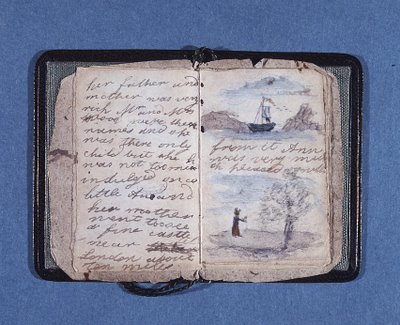
One of the earliest known manuscripts by Charlotte Brontë will be on display at the Bronte Parsonage Museum, and also featured on a BBC programme displaying 'quirky' items from British museums. Richard Wilcox from the Brontë Society Gazette has much more to say about the piece, on his blog- the Brontë Parsonage E-Magazine Blog. There is also a post about Clare Boyland, author of Emma Brown.

The Haworth Arts Festival will feature an outdoor screening of Wuthering Heights (and some... Bulgarian singing and Flamenco dancing!). For more infomation contact www.haworthartsgroup.co.uk or by phoning 01535 642329.

Wuthering Heights gets (very briefly) compared with Moulin Rouge. In fact, the comparison amount to the 'device' of having one lover die, leaving the other alone and doomed to a life of emptiness without that person who remains crystallized in the mind as the romantic ideal..'

The Bronte Project is reviewed again. This time there is a little more information about its plot but also some extremely vague statements that leave some awkward impressions.

Tuesday, May 09, 2006

Bronte family helps launch book

Thank you, if you're still reading along, Kate Bower, for sending us the news about this book last year! Kate, a descendent of Alice McClory, mother of Patrick Bronte and grandmother of the Bronte sisters, had first tipped us off that Imelda Marsden was writing this book. Kate also shared her story and thoughts on Rose Ann Heslip, cousin of the Bronte sisters in a special Brontëana post here.

From dewsbury today:

DESCENDANTS of the Bronte family helped launch a book about the literary sisters' father written by a former Dewsbury Reporter editor.

The Father of the Brontes was written by WW Yates in 1897, and has been out of print for decades. But Mirfield Bronte enthusiast and Spen Valley Civic Society member Imelda Marsden has resurrected the book, complete with new material from her own research.

The book was launched at the Healds Hall Hotel in Liversedge – a suitable venue for the occasion as it featured in Charlotte's novel Shirley as the home of the Rev Matthew Helstone.Among the guests were Carol Bronte and Margaret Thompson – both Bronte descendants who travelled from their home in Northern Ireland for the occasion. Carol brought along an array of crafts which are being produced by Brontes in the 21st century. Imelda said the launch had gone really well with copies now gracing the shelves of universities in Japan and America.

"We've even got one at Harvard!" she said.

"We're really pleased with it and it all helps put North Kirklees on the Bronte map. So much of the Bronte story is naturally about Haworth, but this area is steeped in Bronte history as well and we want to shout about it."

Imelda said that during the launch event, the idea of twinning North Kirklees with the Emdale and Newry area of Northern Ireland, where the Brontes came from, had been mooted.

Copies of The Father of the Brontes are available from the Spenborough Guardian office at 1 Market Street, Cleckheaton, the Dewsbury Reporter office in Wellington Road, Red House Museum in Gomersal and Oakwell Hall in Birstall. They cost £14.99 with profits going to Holly Bank School, Mirfield.Do you think a twinning scheme would be beneficial to North Kirklees? Contact the Spenborough Guardian at margaret.heward@ywng.co.uk and we will pass your views on to Imelda.

Today's Bronte News

Renown literary critic, Zoe Dumitrescu-Busulenga, author of The Bronte Sisters Critical Approach (1967) died yesterday at age 86.

There is an interview with Dame Darcy, whose Illustrated Jane Eyre is coming out this fall. There is more information about the project in the archives, which are are trying to arrange at the moment... (only 218 posts to go!)

What is your latest project about? Gasoline is about a family of witches that live in a utopian society after the apocalypse. They are in a darkwave band. They travel in search for gasoline for their car. The message of this movie is about technology working with nature and the earth and magic taking over the industrial age. It's also about how fairies and Native Americans really believe the same thing. It will have live action and animation.

Also, I am making
Dame Darcy.com into a Meat Cake wonderland of multi media extravaganza while preparing for Putnam Penguin to release my new book, The Illustrated Jane Eyre, this fall. I am booking shows on the East Coast during the last two weeks of October 2006 and the West Coast the first 2 weeks of November. Putnam is going to link book signings to my show dates for my band Death By Doll.

More on Polly Teale's Jane Eyre in London.

Jane Eyre is one of the 10 best books to read out loud! Believe me, this is true.

And this poor fellow is taking the first line of Jane Eyre a little hard. Cheer up! The rain clears up eventually (okay, so there's some lightning later and a few fires but then everything is lovely!).

In Talahasse, Florida, the Thomasville Entertainment Foundation's 2006-'07 Concert Series includes a performance of Jane Eyre:

The Series A package is $70 and includes performances by Trio Con Brio Copenhagen, mezzo soprano Frederica von Stade with bass vocalist Samuel Raney and the Australian Chamber Orchestra with cellist Pieter Wispelwey. The Series B package is $70 and features Maureen McGovern, Chris Brubeck's Triple Play and the Acting Company performing Charlotte Bronte's "Jane Eyre." The Series C package is $130 and include all six concerts. To order, call (229) 226-7404 or e-mail tef@rose.net .

Explore Yorkshire from a Bronteboat!

And the annual 1940s reenactment invades Haworth.

ETA: Fixed broken link.

Thursday, March 02, 2006

Shop Brontë Parsonage Museum

After witnessing my distress over not being able to find a copy of Agnes Grey, reader Alan Bentley reminded me that the Brontë Parsonage Mueum Shop now has an online store front. I say reminded because I first heard about their new presence through the Brontë Parsonage E-Magazine Blog, run by the editor of the Brontë Society Gazette.

In our shop you will find a wide range of books, gifts and souvenirs including old favourites, new temptations and curiosities, many of which are exclusive to us. Profits from sales help support and maintain the museum and its collections.
At the museum shop we are passionate about the lives and works of the Brontës. Our aim is to provide the largest collection of Brontë related products for the enthusiast or for those with a growing interest.


It looks like they carry most things, but not 'BrontëBerry Lip Balm'.

Tuesday, February 21, 2006

Face to Face with Charlotte Bronte at the Parsonage


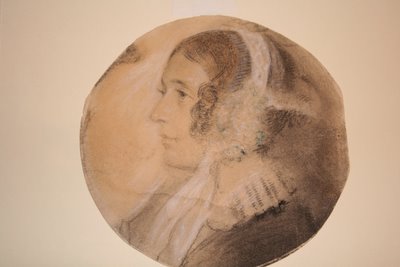
The Bronte Parsonage E-Magazine Blog has posted this great article by Diane Benn about a current exhibit at the Parsonage Museum called Face to Face with Charlotte Bronte. Among other things, there is this image of Charlotte only recently acquired by the museum. I remember when it was purchased among other items of the Brontes. If I remember correctly, it was supposedly drawn while Charlotte was in Belgium, but I cannot say for certain. It is wonderful to see what restorers are able to do with such material. I saved an image of the portrait from when it was posted on the auction website (where it was shown next to other portraits of Charlotte):


Other news from the Parsonage Blog, the Bronte Society is organising their spring walk (route and contact information here), DNA tests may soon be performed on hair samples from the Brontes (more on this here). A film about Charlotte at Hathersage may also be in the works, and there's a new Bronte Society fanzine for children- 'Genius!'

Sunday, January 29, 2006

Wuthering Heights by Bernard Taylor


This found me by way of Thisbeciel and Biedroneczka. This is yet another musical. Most of the tracks can be downloaded from Mr.Taylor's website, but there is also a CD which I think includes another 15 songs. I am hoping to coax someone into writing a review for Bronteana. For now, I have some initial reactions to register.

Here is a brief intro to the work:

Taylor's musical was the first stage adaptation of the story to be given the approval of the Brontë Society. The concept album was released by Silva Screen records in 1992, and opera star Lesley Garrett also used two of the songs for one of her best-selling solo albums.

A 1994 amateur performance in the Netherlands was very successful and generated discussions for possible other productions. It has been running in repertoire in Poland since 1996 and Rumania since 1997. It debuted in Australia in 1998.

The show requires a minimum cast of about 15, but can be expanded to include a chorus of 20 or more. Orchestrations are available for a pit orchestra of 12.

This is the second music theatre adaptation of Wuthering Heights that I have come in contact with. I thought, and still do think, that the novel has a lot of potential for both opera and music theatre. Both of these work best when the emotions stretch beyond the imaginative levels of experience to the mythic. This is why characters in music theatre break into song. But the first version of Wuthering Heights that I heard so failed to reflect the mythic level of WH that it left the whole thing as something of a farce. Heathcliff was far too vulnerable and ...well, nice. The music was melodious but lacked depth. I should return to it, because I have only heard some very small selections but these impressions have stuck over repetitions.

This production from 1990 is a different story. I am quite impressed with the sensitivity of the score in particular. On the first listen, I was troubled by some of the lyrics but even then I realised that I was simply biased against the very idea of Heathcliff singing. When I got passed that, on a second and third listen, I heard the Arabic rhythms of his theme. I came to think that IF Heathcliff were to sing, he would sing like this. The exclaimations of 'Cathy!' that troubled me before now seem to rumble in the underscore and force their way through into the melody.

Besides this, the songs are beautiful in their own right. In the Prelude there is beauty and a sadness lurking behind it. I get the impression of beginning a celebration and a tragedy. I think this is fitting.

Two of the songs I've gone over are: Cathy! and I See a Change in You.

In addition to Wuthering Heights, Mr Taylor has adapted several other works of literature to music theatre- with equal sensitivity! He has adapted Pride and Prejudice, which captures the period so nicely in its score. The lyrics also are quite good but there's something... off. I think it is his weakest adaptation of those I have listened to so far. He has also adapted Much Ado About Nothing, which I have to admit is delightful. Again, he has managed to encorporate the scales and rhythms popular in the Renaissance into this work. I will take the liberty of recomending Benedick's song on hearing of Beatrice's passion: Madness, performed by Paul McGann as Benedick.

The work has also been the subject of discussion in the journal formerly known as 'Bronte Society Transactions' but now known as 'Bronte Studies.' Mark Seaward, editor of B.S.T. said of the work: "Bernard J. Taylor’s work marks the first time that the true spirit and drama of Emily Brontë’s masterpiece has been captured in a musical." Taken from this page, also on Mr.Taylor's site.

Critics on Wuthering Heights by Bernard Taylor:

"Bernard J. Taylor's big, sweepingly romantic score sustains a feeling of dark passion entirely appropriate for an adaptation of Emily Bronte's novel concerning the ill-fated love between Cathy and Heathcliff." - Show Music Magazine, USA, Summer, 1992.

"This is what stage music should be - passionate, powerful, melodic . . . If you buy only one album this year, make it this one - Mike Gibb, Masquerade Magazine.

"Every number, whether vocal or instrumental, packs the kind of emotional punch that musical performers and audiences cry out for." - Sarah Hopkins, Beneath the Mask, Summer 1994 issue.
"Something to shiver about!" - House & Garden (British edition), March 1992.

Tuesday, January 24, 2006

Brontëana is News!

Thanks to 'Curious' for this very curious bit of news! Brontëana has been mentioned, briefly, in the most recent edition of the Brontë Society Gazette:

From the "In Brief" section on page 7:

"Jane Eyre: The Musical closed in Toronto a decade ago, but is still a matter for discussion and dispute in certain circles. The Canadian undergraduate who runs the constantly interesting Bronteana website is currently gathering material on the show, which was panned by local critics for being 'bloated'."

If it wasn't for 'Curious' I would never have known. I am not a member of the society, and I have no idea where I would get a copy of the Gazette otherwise. I should probably thank Mr.Wilcocks at The Bronte Parsonage E-Magazine Blog as well. I have a feeling that he is responsible for this particular honour!