Home Resources Livejournal Feed Wordpress

Showing posts with label books. Show all posts

Tuesday, July 08, 2008

Mr.Charlotte Bronte: The Life and Times of Mr. Arthur Bell Nichols


McGill-Queen's writes to us to announce the release of an interesting new biography of Charlotte Bronte's husband:


McGill-Queen’s University Press is pleased to announce the release of Mr. Charlotte Brontë: The Life and Times of Mr. Arthur Bell Nichols.

This book was written by a direct descendent of Mr. Bell Nichols and establishes him as an important, rather than ancillary, figure in the Brontë saga. It also provides fresh information about his upbringing, his family and his pre-Haworth years in Ireland while including never-before-published material from the Bell Nicholls family.

Mr. Charlotte Brontë: The Life and Times of Mr. Arthur Bell Nichols would be an excellent addition to your collection of Brontë-related books and memorabilia.

Pricing and order information and can be found by clicking on the hyperlink above!

Saturday, June 02, 2007

Second Edition Life of C.B. Goes on Sale


According to the Yorkshire Post, an exciting auction is in the making this weekend:


A RARE copy of a biography about the life of Charlotte Brontë which created a scandal in 19th century society is to go under the hammer tonight as a part of a weekend of activities celebrating Yorkshire's most famous literary family.
The second edition print of Elizabeth Gaskell's The Life of Charlotte Brontë is the prized item among a collection of 90 books which are being auctioned off at the Brontë Parsonage Museum in Haworth.

The book, which dates back to 1857, triggered two threats of libel action when it was printed and is expected to fetch hundreds of pounds.

The threats came from a woman who was said to have had an affair with Charlotte's brother Branwell Brontë and from the family which ran a school near Kirkby Lonsdale which the biography claimed had been the inspiration for Low Wood in Jane Eyre.

Now Brontë fans can get their hands on a 19th century copy of the book which was part of a collection bequeathed to the Brontë Parsonage Museum by Arthur D Walker, a librarian at Manchester University.

Museum librarian Ann Dinsdale said: "It is very rare to find a second edition copy of the biography. The book resulted in libel actions being threatened and was very controversial at the time.

"The rest of the collection includes scholarly editions and literary criticisms of the Brontës."

The auction opens the Brontë Society's annual weekend which runs until Tuesday. Tomorrow night four Brontë biographers will explore some of the stories which surround the family at a panel discussion in West Lane Baptist Chapel (7.30pm).

Juliet Barker, Edward Chitham, Rebecca Fraser and Lyndall Gordon will take part. Brontë Parsonage Museum deputy director Andrew McCarthy said: "It promises to be a fascinating evening."

Monday, March 26, 2007

How Nancy Drew Saved My Life


Or how to succeed in publishing without really trying. Answer? Copy Jane Eyre.

Not only is Jane Eyre (in a severely stripped form) the official template for some publishing houses specializing in serial romances, but it is a favourite novel to be just plain ripped off. No copyright, no problem.

The following is a summary of 'How Nancy Drew Saved My Life' by Lauren Baratz-Logsted:

In her fourth novel, Baratz-Logsted, author of The Thin Pink Line (2003), offers the charming tale of a literature-loving nanny. At 23, Charlotte Bell has just had her heart broken by the married man she unwisely fell in love with. She decides to take another position, as nanny for the American ambassador in Iceland. Once she takes up residence in the large, creaky house and meets her imperious, forbidding employer, Edgar Rawlings, she can't help but feel like literature's most famous governess, Jane Eyre. But Charlotte turns to Nancy Drew (channeling the girl detective) for help investigating the more puzzling aspects of her situation, such as the silence surrounding Edgar's mysteriously absent wife and the strange laughter she hears coming from behind a closed door. To make matters worse, Charlotte is starting to fall for Edgar, whose engagement to an Icelandic ice queen seems imminent. Readers who appreciate classic love stories will enjoy the old-fashioned dialogue and Charlotte's fanciful imagination. Kristine Huntley
Copyright © American Library Association. All rights reserved


Old fashioned dialogue stolen directly from Jane Eyre, according to this reader:

I was really enjoying this book when I realized that it was practically an EXACT replica of Charlotte Bronte's Jane Eyre. Even some of the dialogue is the same!
I was rather shocked when I began reading about where Charlotte goes into the library to meet Mr. Rawlings for the first time (which is actually the second because she met him a few hours earlier when he almost runs her over) and they have the same conversation that is in Jane Eyre; where he asks her if she likes presents and she replies that she has had little experience with them. I shut the book right there!
The names of the characters are extremely parallel too, which is even more annoying! Charlotte Bell is the main heroine=Charlotte Bronte. The hero is Edgar Rawlings=Edward Rochester; the housekeeper is Mrs. Fairly=Mrs Fairfax, the dog is Captain=Pilot....it goes on and on.
I just can't believe that she actually got a publisher to publisher her book with the blatant copying of the the characters and the story-line are amazingly unbelievable!


Not to mention, Jane Eyre was written under a pseudonymn. The full title was: Jane Eyre: An Autobiography Edited by Currer Bell.


ETA: I realise that the wording of this post is stronger than I had intended. I did not mean to imply that the author of this particular book has plagiarised Jane Eyre (ex. 'stolen,' 'rip off.'). In addition, I want to make it clear that I have my information from a third party, and have not read the book myself.

Thursday, March 22, 2007

O Seclum Insapiens et Infacetum!

From This is London:

Dozens of schools have rejected gifts of free classic books because today's pupils find them too 'difficult' to read, it has emerged.

Around 50 schools have refused to stock literary works by the likes of Jane Austen, William Shakespeare and Charles Dickens after admitting that youngsters also find them boring.


[...]

Critics said the figures are a damning indictment of the quality of state education in the UK and come at a time when fewer than half of all teenagers are achieving basic standards in GCSE English.

A total of 4,150 schools have received large packages of books under the scheme, which aims to encourage youngsters to read great literary works.

The titles include Charlotte Bronte's Jane Eyre, George Eliot's Middlemarch, Charles Dickens' Oliver Twist and JR Tolkien's Lord of the Rings.

But Helena Read, librarian at Cotelands school in Linconshire, said: "The bottom line is getting the pupils to read, whether it's a newspaper, comic novel or magazine.

"In an ideal world, I would love it if the pupils came into my library and requested some of the classics, but the fact of the matter is that pupils today are living in a different world."

[...]

Another school, which rejected the free 'Everyman's Library' books, wrote: "The paper jackets are ugly and unattractive and the binding is dull and boring.

"What is needed is the familiar paperback format with attractive jacket and abridged versions."

Another school complained: "The books are so unattractive they are unlikely to tempt any pupil."

The figures came as a new CBI report revealed that many business leaders are complaining that school leavers are lacking in basic literacy, numeracy and other 'employability' skills.

Shadow Education Secretary David Willetts said: "These books are the birthright of every child in our country and schools should not be depriving them of the enjoyment of discovering them.

"These book were not considered too difficult. It is shocking that they are being described in this way and children who have been taught properly should have no problem enjoying them.

"It can only mean that standards of literary are much lower that the government claims."

Tuesday, March 13, 2007

First Among Sequels


There is more news about the newest installment of Jasper Fforde's Thursday Next series which began with the best-selling 'Eyre Affair.' Most of the books incorporate some Bronte references, although this one doesn't seem to focus on the Bronte novels. He sometimes will slip Mr Rochester into a book without fanfare, so we will have to keep a lookout:

It is fourteen years since Thursday Next pegged out at the 1988 SuperHoop, and the Special Operations Network has been disbanded. Using Swindon's Acme Carpets as a front, Thursday and her colleagues Bowden, Stig and Spike continue their same professions, but illegally.

Of course, this front is itself a front for Thursday's continued work at Jurisfiction, the Policing agency within the bookworld, and she is soon grappling with a recalcitrant new apprentice, an inter-genre war or two, and the inexplicable departure of comedy from the once-hilarious Thomas Hardy books.

As the Council of Genres decree that making books interactive will boost flagging readership levels and Goliath attempt to perfect a trans-fictional tourist coach, Thursday find herself in the onerous position of having to side with the enemy to destroy a greater evil that threatens the very fabric of the reading experience.

With Aornis Hades once again on the prowl, an idle sixteen-year-old son who would rather sleep in than save the world from the end of time, a government with a dangerously high stupidity surplus and the Swindon Stiltonistas trying to muscle in on her cheese-smuggling business, Thursday must once again travel to the very outer limits of acceptable narrative possibilities to triumph against increasing odds.

For more information, be sure to visit Jasper Fforde's website!

Saturday, March 10, 2007

Book Releases and More on Chapters


We have a few new editions and other books to look forward to next year. But first, there are a few new editions available today including:

The Bloomsbury Editions, reported here back in June, and known for their quirky marketting to teen readers.


Villette by Dover publications. And another edition by Oberon Books.

New editions of Shirley, and a 3 CD audio book of Jane Eyre will be available March 15th and August 1st, 2007.


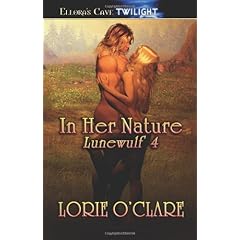
Alas, Chapters, when will you believe that Charlotte Bronte did not, ever, write In Her Nature, a novel about werewolf sex. How it even got on their catalogue is baffling, but why it has stayed there... Here is original post from when it first came to our attention.

I Have Failed You

Yesterday I travelled north with a friend of mine to do a little shopping. There is a shopping centre in Bayer's Lake which has several 'big box' stores and the like. There is a branch of Chapters there. Chapters is the only major mainstream bookstore left in Canada, if I'm not mistaken. Long time readers will know my feelings about them and their practices, but I went all the same. To my relief, their selection was a slight improvement on the one back home (although an entire section on poop was unnecessary... It was called 'the scoop on poop.' What the deuce...)

Anyway, to my delight, I kept bushing up against Bronte novels. Back in my part of the country, it took me months to find a copy of Agnes Grey, and the Chapters stocked a grand total of one copy of Villette, three of Jane Eyre and two of Wuthering Heights. They had some very nice editions of the collected works.

And here is where I have failed you all. As my eyes glittered with the book lust, I neglected to note any information on the publisher or other details. Priced at about $30 was a hardcover edition of the Bronte novels- illustrated. Illustrated with images from turn of the century editions of the novels. My only complaint was that the book was laid out in the same way as the editions of Wuthering Heights and Jane Eyre, with the text in two columns on the page.

I also had the chance to personally handle one of those Jane Eyre journals I reported last year. The journal is made to look like bugundy, aged leather with a page from the Jane Eyre manuscript embossed in gold on the front. Interestingly, the page chosen for the journal is from the interrupted wedding scene and begins somewhere near Mr. Brigg's first lines about the 'impediment.' Not exactly what I expected. Also, the signature they chose was probably one of Charlotte's messiest, but messy is in. In fact, at first glance I could not even read it... I would suspect that it was fabricated, but that the cross on the T is very high. Yes, I may be just a little too methodical.

Saturday, December 23, 2006

The French Dancer's Bastard

Ha! Here we go again:

THE WILDLY DIFFERENT settings of post-revolutionary Paris and 19th-century Yorkshire provide much of drama in Emma Tennant's novel, a historical fiction about the life of one of literature's bit players: little Adèle Varens, from Charlotte's Brontë's Jane Eyre.

Not that the tale is without drama in the first place. Why did Brontë introduce Varens into her novel? She needed a child for Eyre to teach, a reason for her going to Thornfield Hall and meeting Rochester, certainly. But Brontë was also enough of a craftswoman to realise that another intriguing back story for Rochester, besides his stay in the Caribbean, would not only add to the exotic nature of his past, it would add another nail in his coffin of dubious moral values - values that Eyre ultimately restores to him.

Tennant is not happy to rest with Adèle as either plot device or moral counterpoint. As she tells Adèle's story, we see the Paris where she spends her early childhood, a bohemian, artistic Paris that is about as far from industrialising Yorkshire, hemmed in by wild moors, as it is possible to get.

It is here, in this convivial atmosphere, that Adèle lives with her adored mother, Celine, a beautiful actress and performer who flirts with counts and has mime artists and political agitators for friends. The haphazard presence of the dour Englishman, Rochester, who pops up from time to time, disrupts this easygoing life for little Adèle, who doesn't approve of his attentions taking her mother away. But this is nothing compared to the moment when her mother leaves Paris. Adèle is abandoned and only Rochester can look after her now - there's a clear implication that he is the child's true father.

But Adèle never adapts to Yorkshire; the meek little girl obsessed by ribbons and bows that Brontë paints, hides a vengeful, angry child in Tennant's re-visioning. On the surface Adèle plays the stereotypical child of Paris that her new "family" expects, vain and frivolous. Inside she is hardening, though, perhaps claiming that part of her that is the moors, the only part of her that is English. When she comes across the lonely Antoinette in the attic, she is at first overjoyed to meet another foreign soul, then horrified to discover who Antoinette really is. And so it is back to Paris that Adèle runs, after Thornfield Hall is destroyed by fire, returning to a much more politicised city, where her mother's friend, Jenny, introduces her to the feminist cause.

This is an interesting and ingenious twist - Jane Eyre has long been read as a proto-feminist text, full of symbolism about a young girl's adolescence (Jane's imprisonment in the red room by Aunt Reed, for example) and statements about female independence and how women are erroneously judged by their beauty alone. Now Adèle becomes the independent woman, making a living for herself on the high wire ("I was also ecstatic in my new career, neither woman nor child as I swung and pirouetted above the crowd"). This is the time of radical clubs and George Sand, easy to remain ignorant of out in the wilds of the Yorkshire moors.

Tennant uses a number of viewpoints to dramatise her story, giving Adèle, Rochester, creepy Grace Poole and Mrs Fairfax, their own voices. It's a strategy that works well, offering competing versions of the same events; more importantly, it allows us to see the change in Rochester and the emerging maturity of Adèle directly, rather than by report.

Fans of Brontë's classic can be assured that Tennant's story - even when she gives new interpretations of well-known events - is a fascinating complement to the great original.


Fascinating? ...Surely you jest? This was the most hilariously bad novel I've ever read. Although the reviewer deserves a gold star for tactfully avoiding any references to the inane plot (and plot holes unless this is a revised version of 'Adele' which she published some years ago). No mention of the gratuitious nudity (why wouldn't there be a hole in the bathroom large enough for Adele and Bertha (on a rocking horse) to look down at Mr Rochester while he takes a bath? Personally I find it all very fascinating. I also enjoy contemplating why he stands naked in the street earlier as well. And why Mrs Fairfax wants to kill Jane.

I must say that I am growing irritated with authors republishing their own novels under different names, trying to palm them off as new works. Is there a shortage of writers trying to get published? Not a few writers have approached me for assistance in publishing so that can't be the reason.

More to the point, why would a publisher choose to republish Adele? Would the delightful new title really make the book more appealling? Maybe if we republished Jane Eyre as Poor Starveling Possible Tramp we'd get more people to read it?

Sunday, November 26, 2006

Napoleon and the Spectre

Oh, hello! Virago Press? Hi, there's a little something you might want to look into- The Virago Book of Ghost Stories edited by Richard Dalby:

We have 31 stories here, all by women (as you would expect from Virago, even though the editor is a man) and almost all good. Indeed, there is only one utter dud, the first in the book, Napoleon and the Spectre by Charlotte Brontë; this is indescribably feeble and I am baffled by its inclusion.

Indeed, sir, I find myself quite baffled. Charlotte did not write 'Napoleon and the Spectre', it was one Branwell Bronte who is not a lady (forgive my ignorance on the subject- there could possibly be a novel out there about Branwell being a lady. You can never say for sure about these things).

My apologies but this was, honestly, the most fascinating or amusing Bronte item to come across the wire all week.

Thursday, November 23, 2006

Emily's Journal

A new fictional diary of Emily Bronte, focusing on a tragic teenage love affair, has been praised by Bront researchers.
In her book "Emily's Journal", historian Sarah Fermi suggests the novel Wuthering Heights was based on the author's own doomed romance.
Experts have praised the plausibility, skill and detail of Sarah's 236-page portrayal of Emily's thoughts and motivations.


The Cambridge writer completed "Emily's Journal" after 15 years of research into unanswered aspects of the Bront family's lives.
She explored the theory that Emily experienced a profound and tragic relationship as an adolescent, social circumstances keeping the couple apart. The experience was said to have affected the rest of Emily's life and became the emotional source of both her poetry and Wuthering Heights.
Sarah looked at census records, parish registers and wills as she tried to match real-life evidence with the contents of Emily's works.
She chose to put forward the theory as a fictional journal, exploring Emily's life in minute detail, rather than as a biography.
Sally Wainwright, writer of TV drama At Home with the Braithwaites, this year turned the theory into a Radio 4 drama.
Sarah said her book was already selling well at the Bronte Parsonage Museum.
She said: "It might be of interest to the general public as an entertaining read and a completely new look at the Bront sisters.
"A great deal of research went into its creation and the theory is both possible and indeed probable."
Margaret Smith, editor of the Letters of Charlotte Bronte, said she was sceptical when she first started reading "Emily's Journal".
But she said: "I was gripped by the skilful interweaving of fact and possibility, and the way Sarah brought historic places and people to life."
Bob Duckett, editor of Bronte Studies, described the book as a superb mixture of historical research and plausible gap-filling.
Dr Heather Glen, who has written about Charlotte Bronte, said the compelling "Emily's Journal" was based on an extraordinarily detailed knowledge of the social history of Haworth.
She added: "Sarah really does convince us that something like what she describes could have happened and gives an intriguing glimpse of what the Bronte family dynamics might actually have been."
"Emily's Journal" is published by Pegasus, at £8.99 in paperback.


Read more about Emily's Journal by visiting the Bronte Parsonage Blog here.

Also, in a news brief from Canadian Christianity.com: The Department of English at Canadian Mennonite University (CMU) has published its third annual issue of Soul in Paraphrase: A Journal of Literary Arts and Critical Inquiry. This year the theme is 'literary homage,' and it embraces the writing of 22 CMU students who analyze writers they have studied in their English courses. The journal contains parodies of famous poems; adaptations of famous passages; and drawings and photographs based on the novel Jane Eyre.

Wednesday, November 01, 2006

'Hot Furry Sex' novel by Charlotte Bronte


My vendetta against Chapters Canada has more fuel for its fires thanks to Bronteana reader Sarah who wrote in to tell me that Charlotte Bronte has published a new novel! Confused? I know I was especially because the name on the book jacket clearly is not 'Charlotte Bronte' unless you can spell 'Charlotte Bronte' 'Lorie O'Clare.'

The book is called 'In her Nature' and features a muscled, barechested blond man clutching a writhing and buxom woman to his almost as boutiful and heaving bosom. The book is the fourth of a series called Lunewulf, a werewolf romance fantasy series! The other books include: 'Bitten (Moon Lust)', 'In Her Blood', 'Wolf's Passion,' 'Scent of Passion.'

A reader review of another book in the series proclaims it: " A great read for anyone who enjoys a good love story with hot and furry sex!"

Wednesday, September 13, 2006

'French Dancer's Bastard' by Emma Tennant

Emma Tennant, author of many Bronte and Austen rewrites, sequels etc. has a new book due for publication October 6th. The book is called The French Dancer's Bastard: The Story of Adele from Jane Eyre. I am a little confused by this book's existence. Emma Tenant has already written a novel about Adele, with a similarly creative title: Adele. That novel was written in 2003. The approaches seem to be quite different in one respect but in others, exactly the same:

The Amazon.com description of Adele: Emma Tennant retells Jane Eyre from the perspective of Rochester's illegitimate daughter Adele. If Adele is to be believed as narrator, Jane Eyre was not the gracious soul she made herself seem and Rochester's family is an even greater nest of duplicity and madness than Bronte herself made it out to be.

The Amazon.com description of The French Dancer's Bastard: 'Adele is not answerable for either her mother's faults or yours ...now that I know that she is, in a sense, parentless - forsaken by her mother and disowned by you, sir - I shall cling closer to her than before' (from Jane Eyre by Charlotte Bronte). Emma Tennant's new novel tells the story of little Adele Varens, to whom Jane Eyre is governess in Charlotte Bronte's classic novel. The illegitimate daughter of a celebrated Parisian actress, Adele is only eight when she comes to Thornfield Hall to live with the forbidding Edward Fairfax Rochester, who may or may not be her father. Adele longs to return to the glitter of Paris and to the mother who has been lost to her. Her loneliness would be complete were it not for the young governess who arrives to care for her, although Adele at first regards her with suspicion and dislike. But there is another shadow hanging over their lives: the dark secret locked away in a high garret. Adele's curiosity will imperil them all, shatter their happiness and finally send her fleeing, frightened and alone, back to Paris.

A few years ago I spent the summer reading sequels and rewrites of the Bronte novels, including Adele and it stood out to me as one of the worst books I had ever read in my life. It was very funny, and I would not mind having the book simply to prove that I'm not making this stuff up, but I am glad that I had opted to loan it out of the library. I hope 'French Dancer's Bastard' is a rewrite of Adele addressing things like, oh, Adele being 5 when she is conceived, and Mr Rochester smashing windows with some incredibly dense bon bons. This is also the book which features a lot of random moments when Mr Rochester is naked for no apparent reason- like, in the road. Adele just happens upon him with his trousers down in the street. And in the bath tub (there's a spyhole in his bathroom and Bertha and Adele peer down at him while he's in the bath, and he goes off to write an emo entry in his diary about how evil the child is).

And... spoilers!


Mrs. Fairfax tried to murder Jane. I loved this book just for how terrible it was. See, when Jane is pregnant with her first child, Mrs. Fairfax goes to her one day and convinces her that Edward really only loved Bertha, that Adele set the fire that destroyed Thornfield and that Adele has fled, that Mr Rochester is going to confess to setting the blaze to spare Adele and, as a consequence is going to be excecuted for murder (he also wanted for murdering someone in France who sends him letters demanding money- sent via some circus clowns... I am not kidding) and now Mrs Fairfax wants Jane to sign a confession to the fire to save Edward by killing herself. Jane refuses, so Mrs Fairfax pushes her off the roof where Jane dangles from the battlements crying 'I'll never sign that confession, Mrs. Fairfax!' when Mr Rochester drives up (You can almost hear the 'What the deuce?!'). Thwarted, Mrs Fairfax does the only sensible thing- she leaps from the battlements. Whoa, the symbolism...

So, my point is... I hope French Dancer's Bastard is better but I have my doubts!

Friday, August 18, 2006

Would the Brontes Survive BookScan?

This article from The Australian warns us of the dangers of publishing becoming more and more like manufacturing industries (such as asperagus canning). BookScan is a publishing technology which keeps track of sales information for every book purchased. The fear is that publishers will use the information to cut talents from their lists because they are not big sellers.

The world of fiction writing is full of tales (and some fantasies) about manuscripts that almost failed to be published and that went on to sell well and become beloved classics. Think Bronte, think Potter (Harry). It is possible that if sales are the only marker by which works of fiction are to be selected, will the Bovaries and the Heathcliffs and the Potters never see the light of day? Would that matter? I happen to think it would, because readers would be denied the joys of those particular excursions into the world of the imagination. So what to do?

Well once upon a time, I have been led to believe, when publishing was a funny old gentleman's club, when the Penguin paperback had not been born and when you carried your manuscript around in a battered suitcase that you might absent-mindedly leave on the platform at Paddington, publishers were silly enough to subsidise the publication of risky novels and collections of weird poetry by the sales of sure-fire bestsellers. Perhaps even then they were books about diets and how to get the bloodstains out of the carpet after a party. Is it really no longer possible to do that?

Why not gamble on the Flaubert of Flemington, the Sartre of Sans Souci, the Charlotte Bronte of Bronte Park in the sure and certain hope (Book of Common Prayer) that they might one day pay off, come home, sell a bomb?

This does confuse me somewhat. At least in Canada, publishers still are silly enough to invest in works they believe in but know will not sell. And, yes, they do pay for them by selling a lot of really bad books that people will buy. Independent bookstores are forced to do the same to survive. Whether or not the Brontes would suffer if they were publishing today is an interesting question but if we are basing our views on the sales of the novels in the 1800s, BookScan would not be an issue. They would not go up to the Parsonage and say 'sales are a bit down this quarter: mind spicing things up a bit?' The question would rather be one of style- I think, and of length. Consumer criticism of the Bronte novels tend to revolve around a few areas: lack of appreciation for poetic description, complaints about length, and complaints that there isn't any sex in the novels.

Tuesday, August 15, 2006

A Very ...Interesting Interview with Dame Darcy


We've been waiting months to hear more about Dame Darcy's illustrated Jane Eyre, and now we have a new interview and a few illustrations. The interview itself is really very odd:

Darcy was first exposed to "Jane Eyre" while in art school where it had an immediate impact on her. "It's just so gothic and awesome. I really like how all this surreal weird stuff goes down, while the rest of the time is spent drinking tea and staring out the window - which I think is actually kind of cool. I enjoy doing that, too! [laughs]"

Penguin gave Darcy a lot of room to play with in working on "The Illustrated Jane Eyre" and every illustration she created for the book will see print. "What's really great is they asked me to do the cover and it could have been any image from the entire book, but I thought the way to make it really kind of punk rock for the new generation of goth girls that it'll appeal to was to take the scene where Jane Eyre is freaking out while the giant mansion is burning behind and Jane Eyre is written in bloody red letters. That's how hard core Jane Eyre gets! People think it's this classic about a governess, but it's not necessarily about that - I mean, she gets called a witch about 7000 times and everything demented and tragic goes down during the book. I thought that should be portrayed. Plus, she's seriously Catholic-damaged, which is probably true for most of my fan base. [laughs]"

So much for overtones. 'Catholic-damaged?' And Jane is a witch? She's also called a skylark, a linet but they're not in fashion at the moment. I wonder what the last half of the book's illustrations will be like.

Wuthering Heights the Graphic Novel


Next month a 'brand new adaptation' of Wuthering Heights will be available- a graphic novel:

A fine addition to this canon is a graphic novel that adapts Emily Bronte's classic and much-loved novel Wuthering Heights. With its generous helping of sex, violence and death, its rain-streaked, barren backdrop of the Haworth moors, its gothic obsessions, make it a perfect topic for comic book treatment.

Sex?... Must have been watching the 1970s film with Mr. Dalton.

The book has been specially commissioned for the Radical Brontes Festival, which runs from September 15-24 and, as its name suggests, aims to paint the women and their work in a very different light to the common misconceptions surrounding them - that they are cosy, romantic novels written by genteel sisters with nothing better to do.

[...]

So what will Bronte purists make of his adaptation? "It is quite a complicated story when you get into it," says Adam. "There are a lot of flashbacks and I had to do away with a lot of the long narrative passages but at the same time keep to the style and preserve the language of the novel.
"But by and large, I think I've been fairly faithful to the original while endeavouring to keep the pace moving. I'm not really worried that I'll upset the Bronte faithful because there haven't been any major changes to the story."


Wuthering Heights: The Graphic Novel will be launched at Waterstone's in Bradford on Saturday, September 16.

Saturday, August 05, 2006

Gendered Reading, Again. And the Brontes are not 'Wallpaper'

This article from the Globe and Mail, is disturbing for how many generalisations it makes concerning the reading habits of men and women. It references the poll taken earlier this year of the most influential novels in which the Brontes stood out on the list of the women who were polled, while the men hardly listed any book written by a woman. Of course, there's this brief disclaimer:

Publishers and educators say they don't like to generalize about the tastes of half the population, but they will speculate as to why women prefer fiction, and are ready to debate both the social and the literary implications.

Then follows a lot of such speculation and generalisation, such as:

Reading fiction involves empathizing with the characters, and thus draws on women's traditional emotional strengths. Men, on the other hand, turn to non-fiction to learn about the world around them.

[...]

Literature has veered away from story to be about psychology; male writers are as responsible for that as women . . . but I do think men are interested in things, why things work, why things happen, and men look for more comedy in fiction. We [men] are bored by the earnestness of contemporary fiction.

[...]

Smith finds Canadian fiction particularly earnest and says the typical Canadian novel is one that appeals to women with a story of family, memory and loss. He's concerned that the success of these “women's novels” is limiting the kind of fiction that gets published here.

“Guys look for ideas,” says Smith. “Very intelligent men I talk to, none of them read fiction. It's girl stuff: hundreds and hundreds of pages of feelings. To think that no one perceives fiction as being about ideas is depressing.”

The debate is still alive, but this article goes all over the map, dissecting Canadian book-buying trends which do not prove much. Canadians are very poor book buyers. This past year I worked for a publisher and also heard from many people in the industry. It is a total mess at the moment: no one is buying books. And possibly this is not because we are not reading. When our only book chain refers to books as 'wallpaper' in the industry- material to spead along the walls of the store- is it any wonder that after picking up enough trash hailed as 'a masterpiece!' we Canadians begin to turn away?

To illustrate, we have a bookstore which takes up a corner of the mall. Half of the floor space is taken up with a Starbucks, and what could be an... Ikea store? There are all kinds of useless and unidentifiable household items, stationary, stuffed animals and glassware- nothing, in short, to do with books. Another large section is given to a fake fireplace (full-sized) and chairs for reading what no one is willing to buy. And, did I mention, the full sized children's play castle? In this BOOKstore, you cannot find many of the works of Dickens no matter how you try. Gaskell? Very funny. And the Brontes? Two copies each of Jane Eyre and Wuthering Heights, with a token volume of the juvenilia. And perhaps more shocking and illustrative- I could not find any works by Jane Austen either, but I did find the sexed-up spin-offs.

I last left the store determined never to return when they did away entirely with the 'classics' section. This chain- Chapters Indigo- has 70% of the market, and literally dictates what gets published. In some cases publishers refer to the company before approving a manuscript. Women reading more fiction than men could be explained in so many other ways. Perhaps women are more likely to congregate at the Starbucks? But, believe me, it has nothing to do with how men and women think and read.

Friday, August 04, 2006

Brontes in Oxford and Penguin Books

Heathcliff and Catherine make the Penguin books list of 'Best Lovers'. Some of the other categories and choices are amusing or objectionable (Wide Sargasso Sea made the 'Best Crazies' list. I was also not aware that I, Claudius is a classic. And just who is the 'great hero' from H. Rider Haggard's She? Is it Leo Vincey, the lounging blond beauty? I hope not!). The entire list is available here. Probably English professors everywhere should try to take advantage of Chaucer's The Canterbury Tales making the 'Best Sex' list.

Anecdotes about the Bronte sisters are highlighted in this article about the New Oxford Book of Literary Anecdotes. Among those concerning Charlotte Bronte is the following from a meeting with William Makepeace Thackeray:

Some of the greats were very odd indeed. Algernon Charles Swinburne, frustrated at not finding his hat in the hall of his club, proceeded to stomp on those that were there until the porter told him he had entered the club without one. And the Brontes were remembered by an old lady in their village thus: "They were all dressed alike until they gate into young women. I don't know that I ever saw them in owt but print -- I've heard it said they were pinched -- but it was nice print." Charlotte was given a party in London by William Makepeace Thackeray. It was not a success. One guest, trying desperately to engage her in conversation, opened with, "I hope you like London?" to which Charlotte replied, "I do, and I don't." That was it.

Oh, but she did have more to say about it afterwards!

ETA: Also, if you've been thinking of re-reading Jane Eyre, there's a new blog just for you: Eyre-along!

Saturday, July 29, 2006

In Which the Brontesque Returns with a Vengence


In the course of keeping this blog I have come across a huge number of films, books and and 'other' which are branded 'Bronte' or rather 'Bronte-like.' Things have been quiet for some time, but now Brontesque has broken out again. I am a little confused about this pair of Bronte references in a book review for Kept: A Comedy of Sex and Manners by Y. Euny Hong. The book is described thus:

The trouble with the aristocracy these days is that they just don't sell as well as celebrities. With only middling beauty and brains, staggering debt, and a marked disdain for reputable employment, Judith "Jude" Lee—a descendent of Korean royalty with an utterly bourgeois fixation on class—is finally forced to turn herself over to a madam so upscale she makes Heidi Fleiss look untouchable.

And now, the Bronte references:

The secret, it turns out, to surviving in a city full of beauties and brains but few graces is a surfeit of sitcom-ready charm. This, for Jude, comes second nature, if not from her royal ancestors then from the ones she name-drops with far greater frequency—Becky Sharpe, Elizabeth Bennet, and Jane Eyre, and all the rest of those proto-capitalist players. With a flawless ear for hyperliterate one-liners ("Jung's unchecked early years had made her untamed and feral, like a female Heathcliff") and a sharp eye for a good deal (the adorable Kasporov double she chooses), Jude overcomes at least two dozen plot-breakers, easy as starving a peasant.

I am just trying to imagine someone who is at once like Becky Sharpe, Elizabeth Bennet, Jane Eyre and Heathcliff... The Amazon.com summary is far more comprehensible.

Saturday, July 15, 2006

Writing Life to Feature Poems about the Brontes

A new book about Canadian writers will feature poems by Jane Urquhart about the Bronte sisters:

Urquhart offers are poem about the Bronte sisters, who have influenced her writing -- especially her second novel Changing Heaven.

The book is a collection of pieces written by prominent Canadian authors about the act of writing. The list of authors is impressive indeed, including many of Canada's most celebrated authors of all time: Margaret Atwood, Russell Banks, John Berger, George Bowering, Dionne Brand, Austin Clarke, Lynn Coady, Michael Crummey, Bernice Eisenstein, Camilla Gibb, Charlotte Gray, Elizabeth Hay, Michael Helm, Sheila Heti, Wayne Johnston, Annabel Lyon, Alberto Manguel, Anne Michaels, Rohinton Mistry, Lisa Moore, Alice Munro, Michael Ondaatje, Eden Robinson, Marilynne Robinson, Peter Robinson, John Ralston, Saul Shyam Selvadurai, Russell Smith, Rosemary Sullivan, Susan Swan, Madeleine Thien, Jane Urquhart, M.G. Vassanji, Alistair McLeod, and David Young.

WRITING LIFE, edited by Constance Rooke (McClelland and Stewart, 450 pages, $24.99).


Changing Heaven is described thus: Two worlds are intertwined in this hauntingly beautiful story as it moves from Toronto to the English moors and to Venice, Italy. The time frame shifts between present and past, linking the lives of a young Brontë scholar (a woman in the throes of a troubled love affair), a turn-of-the-century female balloonist, and an elusive explorer with the ghost – or the memory – of Emily Brontë. Urquhart reveals something about the act of artistic creation, the ways in which stories enter our lives, and about the cyclical nature of love throughout time. This is a novel of darkness and light, of intense weather and inner calm.

Monday, July 03, 2006

A Difference of Opinion

Jane Eyre was dropped from a school honours reading list. I really cannot understand why administrators would think this is a good idea?

Jane Eyre recently got the boot and was replaced with Pygmalion on incoming Niles West sophomore honor students' list for another reason.

"We were getting a lot of complaints from the moms of boys who said they just couldn't get into it," Firer said. "They [the boys] thought it was too girlie."


So, there is such a thing as a 'girlie' and non-girlie classic? They ought to be challenging such notions, not confirming them in this way. I have many complaints about my high school education, but we certainly never supposed that some material was for one or the other gender- ever. And it was never an issue. To me, it seems like a backwards notion. Was it too much trouble to have a class discussion about how the class recieved the book? Or were they only expected to mark off imagery lists and make plot diagrams?